

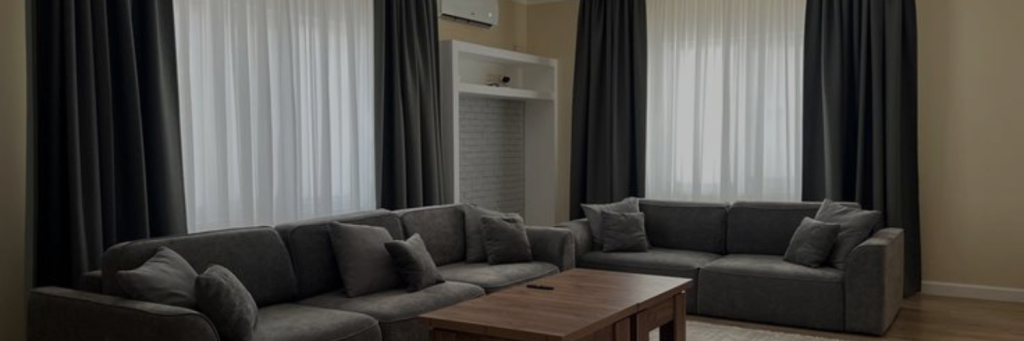
Curtains do more than cover windows. They shape how a room feels, how tall it appears, and how smoothly the eye moves through the space. While measurements are important, the real impact of curtains comes from proportion, scale, and visual flow. When these elements are handled well, curtains elevate a room quietly. When they are not, even the most beautiful fabric can feel off.
Why Length Changes the Mood of a Room
Curtain length has a direct effect on how spacious a room feels. Curtains that stop short of the floor often break visual flow, making ceilings appear lower and windows feel smaller. Floor-length curtains create continuity, allowing the eye to travel downward without interruption.
For a more refined look, curtains that lightly touch the floor feel relaxed and modern. A slight puddle adds softness in bedrooms or formal living spaces, while a clean break at floor level works better in contemporary homes. The choice depends on the mood you want to create, not just the window size.
Hanging curtains higher than the window frame also makes a noticeable difference. Mounting tracks or rods closer to the ceiling elongates the wall visually and gives the room a more open, well-proportioned feel.
Width Is About Fullness, Not Coverage
Curtain width is often underestimated. Curtains that barely cover a window when closed tend to look flat and functional. Generous width creates folds, depth, and movement, which makes curtains feel intentional rather than temporary.
A good rule is allowing enough fabric so curtains look full even when drawn open. This fullness frames the window instead of disappearing to the sides. In larger rooms or open-plan spaces, wider curtains also help balance scale, preventing windows from feeling lost within the wall.
How Proportion Creates Visual Calm
Curtains should feel in proportion with the room, not just the window. In compact spaces, lighter fabrics and moderate fullness keep things balanced. In larger rooms, heavier fabrics and generous drapes help anchor the space.
The goal is visual ease. When curtains are sized correctly, they blend into the room’s rhythm rather than drawing attention to themselves. Furniture placement, wall height, and window size all influence how curtains should be scaled.
Flow Matters More Than Precision
Perfect measurements do not guarantee good design. Visual flow does. Curtains should guide the eye smoothly from ceiling to floor, from wall to window, without abrupt stops. When length and width are chosen with this in mind, the room feels taller, calmer, and more resolved.
The Art of Choosing Curtain Length and Width
Choosing curtain length and width is less about rules and more about perception. Thoughtful proportions create height, fullness adds softness, and visual flow brings everything together. When curtains are designed to suit the space rather than just the window, they stop feeling like accessories and start feeling like part of the architecture.