

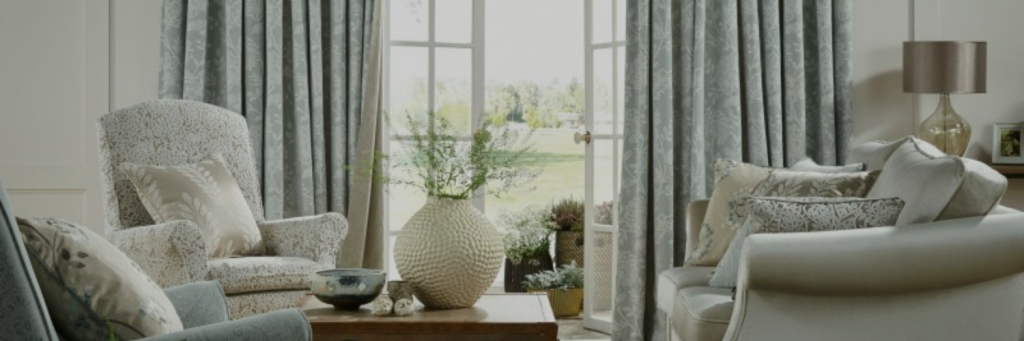
Interior design is as much about illusion as it is about layout. The size of a room does not always determine how it feels. Fabrics, positioning, and visual flow often define whether a space feels large, airy, intimate, or crowded. Curtains and upholstery play a central role in shaping this perception, influencing the way light travels, how height is perceived, and how seamlessly a room flows from one element to another.
Light Controls Mood and Movement
Curtains act as filters between indoor comfort and outdoor light. Sheer fabrics soften sunlight and help a room appear brighter, giving an open and breathable effect. Thicker materials provide depth and create a more cocooned atmosphere, particularly in bedrooms and lounge areas.
Lighter coloured curtains reflect daylight and make smaller rooms appear wider, while darker tones absorb light and add emotional richness. The choice of fabric weight directly impacts whether a space feels expansive or enclosed.
Height Is Created Through Placement
One of the simplest ways to visually increase height is by mounting curtain rods closer to the ceiling rather than directly above the window frame. Long, uninterrupted fabric lines draw the eye upward and make ceilings appear taller. Floor-length curtains strengthen this effect, even in compact rooms.
Vertical patterns or softly falling folds also enhance the perception of height. Upholstery follows a similar rule. Slim legs on sofas, light fabric textures, and minimal profiles allow visual breathing room. Bulky, heavy furniture lowers visual height and makes spaces feel tighter than they actually are.
Flow Depends on Fabric Consistency
Rooms feel cohesive when fabrics talk to one another. Upholstery, curtains, and cushions should complement in tone and texture rather than compete. When colours or fabrics clash, the room feels broken into pieces. When they harmonise, the eye moves smoothly across surfaces.
Repeating similar fabric finishes in different forms helps create rhythm. Cotton upholstery paired with linen curtains, for example, builds continuity without monotony. The effect is both calming and structured.
Proportion Shapes Comfort
Oversized prints in small rooms often overwhelm, while delicate designs disappear in large spaces. Choosing fabric scale wisely is essential. Smaller rooms benefit from finer textures and subtle patterns. Larger living areas can carry bolder upholstery and thicker curtain fabrics without feeling crowded.
Careful proportioning ensures that furniture feels balanced and fabrics support the dimensions of the space rather than distort them.
Conclusion
Curtains and upholstery quietly redefine space. They stretch height, soften light, guide movement, and balance proportion. When used intentionally, fabrics can change the way a room feels without changing its structure. A thoughtful fabric choice turns ordinary rooms into inviting spaces and creates comfort that is seen as much as it is felt.